To owners/managers of rental properties, gargbage disposals are like a hanging fingernail – they are painful to have around and the sooner they are gone the better..
What do I have against gargabe disposals?
1) they just hang below the sink waiting to break down
2) they can smell like a sewer, and
3) they are a hazard to tenants!
There is almost no upside to having garbage disposals. If tenants have leftover food, they just throw it into the trash can.
Having just replaced garbage disposals in two of my rental houses, I can say that there is one good thing that I like about garbage disposals. They are easy to remove.
Removing the Disposal
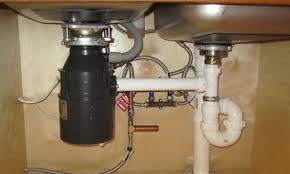
1. Use the GD remover tool to release the garbage disposal. Remove tubing first. The GD will fall to the ground. Be ready to catch.
2. The one tricky part is that to remove the basket fron the sink opening (that was formerly connected to the GD), there is a retainer ring below the sink that must be pried off with a screwdriver.
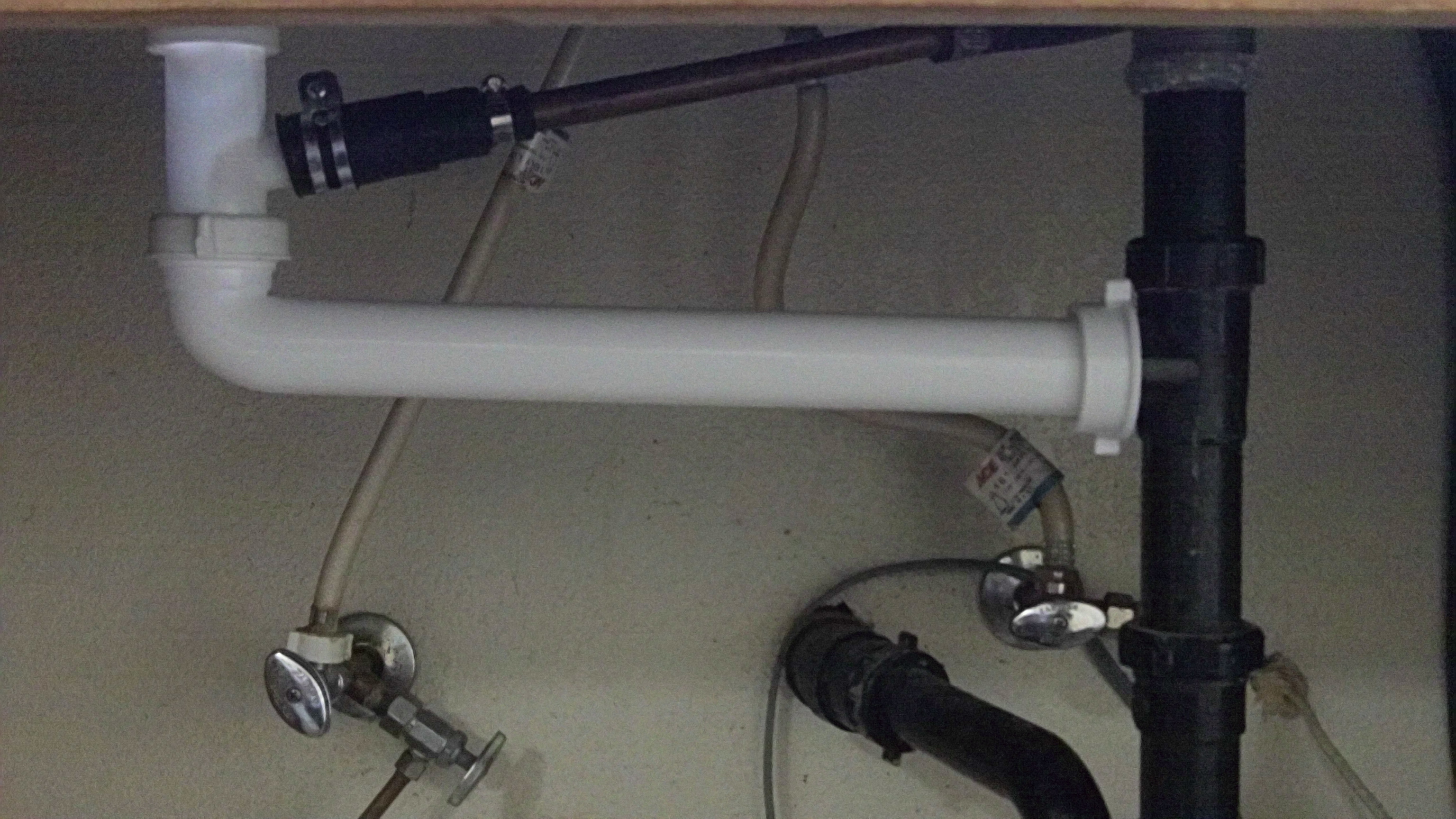
Once the garbage disposal is out, replace it with the appropriate pipes.These days,the tubing just connects togther. No need for glue. It’s as easy as putting tinger toys together. Piece of cake.
If you need, help ask the experts at Ace Hardware. That’s what I did.
Upcoming Presentations:
April 18, 2015. Forum Speaker at The Association of Lincoln Presenters 2015 Convention, Vandalia, Illinois.
I once purchased an investment property that I was sure was going to be an ideal rental house. It was in a location where there was high demand for rentals, and it was nice attractive house.
My Shocking Experience
I decided to check out the property one more time on the day before signing the papers. I was in for a shock. When I opened the door, I was hit in the face with an overpowering dank smell that was so thick that I almost couldn’t get into the house. It was like walking underwater.
I looked down and I saw that the carpets were soaked with water. The walls of the house were black. I quickly discovered that the hot water heater was leaking, and had flooded the house.
I will not scream! I will not scream! I will not Aaaahhhhhhhhh!!
Since all the windows and doors tightly closed, the mother-of-all steam baths had formed inside the house. If I weren’t already as thin as a rail, I probably could have lost 30 pounds in there in 10 minutes.
I Feel a Scream Coming
While I would have had every right to scream like Jamie Lee Curtis in those old “Halloween” movies, to my credit, I didn’t do that. Plus, my two sons were with me at the time, and it would have ruined the image they had of me as a modern-day James T. Kirk, bold captain of the Sprouse family.
Steady as she goes, Mr. Chekov.
Since I’ve now used up my ‘reservoir’ of metaphors to describe this dire situation, let’s get to the steps to address this issue.
5 Steps to Take if Your House is Flooded
1.) Don’t touch the merchandise.
Don’t touch anything that is electric while standing in water. It may be tempting to want to turn on lights and turn off appliances, but don’t do it. You wouldn’t adjust the radio while you are in a bathtub, and your house is now a giant bathtub. If the electrical outlets near the floor are saturated, you should not be in that house.
If the fuse box is in a dry location, turn off the power.
Have an electrician check the system before turning on the power again.
N 95 Mask
If you plan to be inside the house for any amount time, or if you plan to clean up mold, you should wear a N95 mask to wear while you’re there. (See step #5 before donning your mask).
2.) Remove the water.
Open up the doors and windows and let the house air out for at least 30 minutes before spending any time in the house.
Dry out things that got wet. You basically have between 24 to 48 hours to dry out things that have gotten wet, before irreparable damage sets in.
Once the electricity is back on, having been checked by an electrician, you can use a “wet dry” shop vacuum to remove standing water. Wear rubber boots.
Even after the water is pumped out of the house, you must act quickly to avoid the residual damage in walls and under carpets. The imbedded dampness can permanently weaken carpet fibers and soften sheetrock walls.
The most important thing to worry about is mold and mildew. Mold and mildew spores are always present in the air that we breathe and if we only add a little warmth, darkness, and moisture, they become unwelcome house guests.
3.) Get the humid air out.
Use de-humidifiers and fans to remove the excess humidity. Place fans in doors and windows to blow the air out the window, so as not to circulate mold back into the house.
Do not turn the furnace on to dry out the air. This will only increase the humidity and transport the spores throughout the house.
Have your home heating, ventilating, and air-conditioning (HVAC) system checked and cleaned by a maintenance or service professional who is experienced in mold clean-up before you turn it on.
4.) Get rid of carpet padding.
Usually, even though you haven’t passed the 24-48 hour time limit, disaster recovery experts will remove any soaked padding from beneath the carpet and treat the floor and the underside of the carpet with a mildew inhibitor such as Pine Sol.
5. Let the doctors do their job
Outta my way!
The Nexium commercial (to treat heartburn) says, “You wouldn’t want a doctor doing your job,” and a doctor comes trotting out of the bullpen to be the relief pitcher in a professional baseball game, or operates a jack hammer. This principal applies to you and your flooded house too. Unless you are an expert, you probably shouldn’t tackle this project yourself. Because mold and mildew are such dangerous foes, it’s best to call in the pros to handle flooded houses.
The Happy Conclusion to My Story
In the case of the investment property that I mentioned earlier, the water had been in the house for several days (beyond the 24-48 hour limit) and the owner wisely owner hired a mitigation company. The company had to replace all of the carpeting and most of the drywall. It was almost like a new house when they finished. They tested the air and the spore count for mold and mildew in the house, and when they were finished, the count was lower than the count outside the house.
Although I had cancelled the sale, I made another offer on the house when it came back on the market, and I wound up purchasing the property after all. It was a better house than the first time I bid on it.
Below is a useful video series about dealing with flooded houses. The emphasis is on pretty drastic flooding (way over the 24-48 hours limit), but it covers many important things to consider.
I recently received several emails and even a postcard from a marketing guru.
He is promoting a new book publishing program where, he says, “REAL multi-millionaires show you how to become THE thought leader by sharing your wisdom and content.”
His postcard reads:
“GET PUBLISHED. GET PAID.
Fair WARNING: If your content creation, distribution, and monetization strategy sucks, you’ll be a broke, unknown expert forever. If your content strategy is smart, distinct, ubiquitous, and automated, you could be a famous millionaire who inspires the world. Your call.”
The card directs you to an on-line video sales pitch, where you see that he is offering a 3-day seminar where you will learn all you need to know to publish your book, for a cost of $10,000 dollars.
Lemme get this straight. We can learn all we need to know in just 3 days?
Take a 3 day swallow for $10,000
Where do we sign up?
Alas, this sales pitch is an un-holy marriage of fact and fantasy.
The Facts:
1.) Many people would like to write a book;
2.) There are genuine benefits from writing and publishing a book.
3.) Book promotion should be smart and ubiquitous.
The Fantasy:
1.) It’s fast. You can learn all you need to know to be a “famous” millionaire book author in 3 days;
2.) It’s expensive, but worth it. You need to pay an exorbitant sum of money to “jump start” your dream;
3.) You need “millionaire experts” to correctly publish and promote your book;
Granted, you could probably learn something from this seminar, but …
if so-called “REAL multi-millionaires” are running the seminar, it’s probably going to involve you handing over your wallet to them so that they can do things for you that you could do for yourself. They’ll also be happy to tie your shoe laces for you and cut your meat up into smaller pieces so it’s easier to chew, but is that really necessary?
This runs counter to what life teaches us about “self-reliance”
Muhahahaha!
Emerson said, “the essence of genius, of virtue, and of life is available to us through our intuition.” If we determine that our intuition is guiding us to write a book, nothing can stop us. We will learn as we advance in the direction of our dreams.
The same is true for book promotion. Some of the most powerful ways to promote your book are accessible to anyone, and they are inexpensive. These include:
I say, instead of sending blank checks to needy multi-millionaires to get your book published, rely on your own inner compass and ingenuity to lead the way. You can do it yourself, and maybe even become more self-reliant and famous-ish in the process.
The Arizona Network of Real Estate invited me to give a presentation to their group about my book “Fix em Up Rent em Out.”
I thought the video might be available to the general public but it looks as though that’s not going to happen.
However, so that no one feels left out, I am going to provide a summary of the key points that I hit during the presentation. As someone who was regularly picked last for teams in gym class, I’m sensitive to people feeling left out. Casting modesty to the wind, I am also including exclusive photos of the event.
So here are:
The 5 Rules on How to Lose Money and Get Your Rental Property Trashed by Tenants (based on an article by Andrew Stefanczyk)
1. Choose the Worst Possible Area
Location will determine the kinds of tenants you will attract, and how much rent you can fairly charge.
Do you want these bearded wonders as tenants?
The best approach is to identify target areas in your city where you would like to focus your purchases. I like to focus on “transition zones” (where there is a mixture of housing types) which are good for investors because we can purchase properties at lower prices, and there is high demand to live in these areas.
2. Put in the very best of things when fixing up an investment property
Use new and expensive sinks, doors, refrigerators, light fixtures, etc. Never shop at stores that recycle construction supplies. Spare no expense.
Of course, the problem is that tenants will not take care of our properties as well as we would,
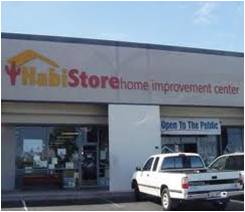
Habitat Store
so we end up with many broken or worn out items. The better alternative is to shop at used building supply stores, and to purchase good, inexpensive, supplies for our rental houses. One such store is the Habitat for Humanity store.
3. Make sure you have absolutely no experience in make basic repairs
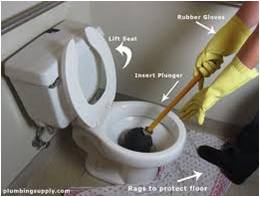
Not knowing how to change electrical outlets, unclog drains & toilets, and replace broken windows will cost quite a bit down the road.
Being as uninformed as possible about who you rent to may be the best way to lose money as a landlord. Do not ask for or check references. Do not call previous landlords and ask questions like, did they pay rent on time? How was the condition of the house or apartment when they left? Did they ever disturb neighbors with loud music or shouting matches? How often would you have to make special trips for repairs? Being as uninformed as possible about whom you rent to will make a huge difference and will increase the chances that you will get tenants that will trash your property and refuse to pay rent.
However, the better way is to:
A. Use a checklist for tenants. Decide what kind of tenant that you want ahead of time.
C. Check county records to see what illegal activities they’ve been up to.
D. Know the Fair Housing Act. Never select tenants based strictly on “race, color, national origin, religion, sex, familial status or handicap (disability).”
E. To find new tenants, use Craiglist, put up arrow signs, and host an “open house.”
5. Make sure you have not learned about your rights as a landlord
Be completely unfamiliar with the eviction process to guarantee long, drawn out disputes with tenants. Don’t keep up to date financial records or copies of correspondence with tenants. Most states provide online information about tenant and landlord rights so avoid reading these.
.
Last Saturday I took my 10-year-old son along with me to repair a window in one of our rental houses. I like to take one of my boys along so they can learn a thing or two about how to repair things, as well as so they can see how I deal with tenants, and, mainly so that we spend some time together and have fun together. I always try to make it fun for them. For example, we went to ACE Hardware to get a new window cut, we looked at the stuff he likes to see, like BB guns and rockets, and, I bought him a bag of Boston Baked Beans.
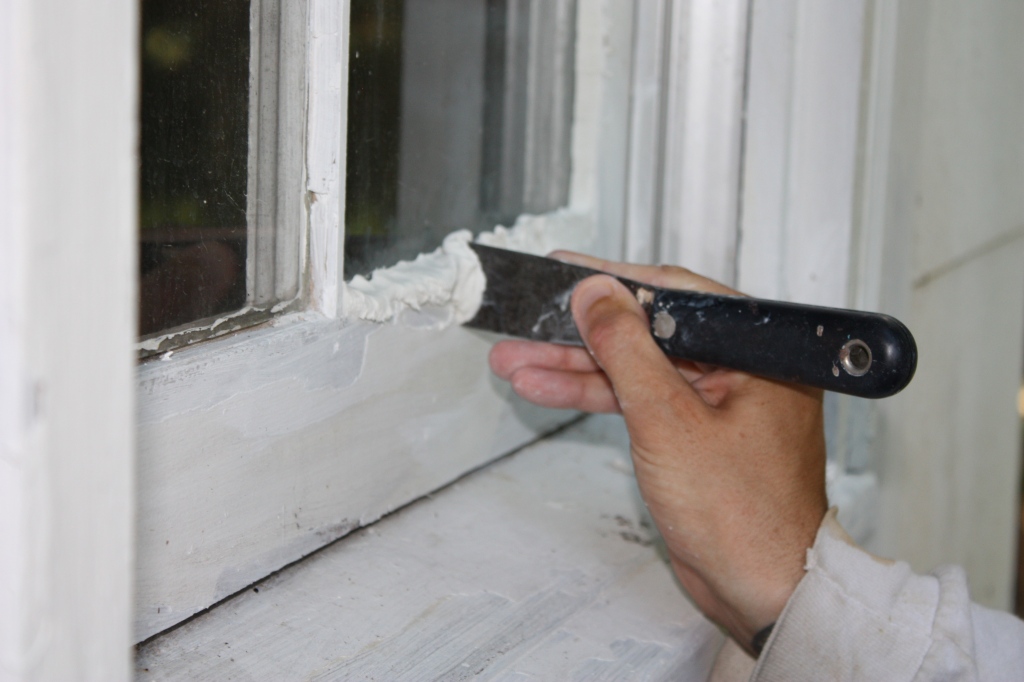
It was really a big help to have #2 son along. He not only does what I ask him to do, unlike his teenage brother “Mr. Cool Guy”, but he also brings an enthusiastic spirit to the endeavor. One of the first things I have to do is to chip out the old putty from around the window. It’s my least favorite part of the job since it involves a lot of tedious work. After I explain what I am going to do, my son responds. “Can I do it?” I say “okay, go at it,” but I’m thinking, “Well, if you really insist!” What is old hat to me is new and exciting to him.
When we arrived back from ACE with the new window, I accidentally broke the window as I took it out of the back seat of my pick-up. I thought it might discourage my son to head back to ACE again to buy another window, but his response was, “I need a refill on the Boston Baked Beans anyway.” After that the broken glass incident became a running gag with comments like “is it time to break the window again?” and “let’s break the window again and get some more Boston Baked Beans.”
I must admit, it’s not nearly as entertaining when I have to do those little repair jobs all by myself.
Tenant screenings is the way to go if you want quality tenants and most landlords come across potential tenants who are either not what they claim to be or have serious behavioral problems. This article takes a look at the funniest screening stories landlords have had and their aftermaths. So sit down, relax or better still grab a cold bottle of beer to nurse while you go through the experiences below.
The Estranged Wife
A couple with no kids moved into a 4 bedroom duplex in the suburbs, the house and environment provided the perfect scenery for the couple but there was only one problem and it was that of meeting up with their mortgage payments. So they decided to put a room up for rent. The necessary adverts were created and finally a prospective client came knocking, he was the perfect tenant for he claimed to be single, had no pets, did not smoke, drink, do drugs and had a well-paying job. This obviously was too good to be true so the couple decided to hire an agent to conduct a little screening on him. After two days, the agent returned to tell the couple that they had been invited to have dinner with the previous landlord of their prospective tenant. On getting there, they were told that the tenant usually preys on sympathetic landlords and if you fall into his trap by renting a room to him, he would move in, behave for some days but a week later a woman who would claim to be his estranged wife would come visiting for some time and then finally move in with a cat. They would then proceed to co-habit like pigs, steal your property and when rent is due, disappear like thieves in the middle of the night.
Ghost Tenants
A couple responded to a landlord’s accommodation advert, they came to see the Landlord and professed that they loved the apartment and would be willing to rent it for the long term. The landlord was convinced that they were the perfect tenants so when the wife came calling the next day without her husband (due to the supposed fact that he works late) to ask for the keys to the apartment so she could look through it, the landlord duly obliged. A day passed, the lady did not return, two passed and she was still missing. The landlord quickly called his agent who conducted a quick search only to find out that the woman and her husband had already moved into the apartment. The police was called and the couple quickly evicted.
Dead beat Prospective Tenant
An agent once recommended a tenant who had the best recommendations ever; he had a good job, perfect credit and good relationships with his previous landlords. A meeting day was fixed and the prospective client shows up with a dead beat car and the attitude of someone who was one step ahead of the law. The landlord who needed to rent his facility out as soon as possible, overlooked this tell-tale signs and had agreed to lease the apartment to the tenant. The recommended signatures had already been traded and an upfront deposit had been made but as luck would have it, a police officer who was driving randomly through the neighborhood spotted the prospective tenant, felt his face was familiar and got down to trade some questions. Suddenly, the tenant bolted and a foot race began. The tenant was finally apprehended and the landlord discovered that the name, details and personal information given by his perfect tenant had nothing in common with the tenant.
The Thief
A couple came with an agent to view a landlords property, after going through it, they decided it was perfect and would be signing the necessary papers the following day but there was just one issue, they needed the house repainted. The landlord obliged, carried the necessary equipment to the house and started painting. He painted into the night and decided to spend the night there instead of returning home late. In the middle of the night, he began to hear strange noises at the side of the house, quickly he got up to investigate and on getting there, he found his prospective tenant trying to detach an A/C unit.
These stories show that conducting an in-depth screening which should include: former landlord credit checks, recommendations and past criminal activities are highly recommended.
My wife and I were watching the movie the “Peaceful Warrior” Saturday night, and I was really inspired by the movie.
In a nutshell, one night when a gymnast, Dan Millman, cannot sleep he wanders in to a service station and meets a mysterious man. Dan injures his leg in an automobile accident and the mystic helps the gymnast to overcome incredible odds and tap into new worlds of strength and understanding. Here’s one of my favorite scenes as Socrates teaches Dan a valuable lesson.
Dan Millman: Life has just three rules?
Socrates: And you already know them…
Dan: Paradox, humor, and change.
Socrates: Paradox…
Dan: Life is a mystery. Don’t waste time trying to figure it out.
Socrates: Humor…
Dan: Keep a sense of humor, especially about yourself. It is a strength beyond all measure.
Socrates: Change…
Dan: Know that nothing stays the same.
At the end of the film, Dan is trying out for the Olympics, after making a startling comeback from his accident. A teammate asks him if can share some tip that he has learned from his training with Socrates to help him do his routine. Dan tells him to get rid of the garbage in his mind, to just forget about winning and his parent’s expectations, and to just focus on the routine.
But, the teammate just doesn’t get it. He replies that he has to win the gold medal, and everyone is counting on him to win. If he loses, he will let himself, and everyone else down, and he’ll never be happy.
What’s really interesting is the expression on Dan’s face as he listens to his teammate, and his realization that he used to think exactly the same way.
How this relates to fixer-upper houses
The movie made me think about how the fixer-upper business is like being a peaceful warrior. The Peaceful Warrior said, “Service to others is the highest good.”
I don’t think its stretching things too far to say that we provide a service. We purchase properties that are worn out and shunned by society. We rehabilitate the houses, make them presentable again, and provide a nice place for people to live in.
Most people only re-examine the path that their life is taking when they suffer a traumatic experience. Some people take a deep breath when they reach a point where they realize that their days are numbered. They sense the need to focus the remainder of their lives on doing something that provides a deeper satisfaction and allows them to spend more time with their family. For others, they realize that they don’t want to continue to work at a mind-numbing job or for an ungrateful boss.
There is more to life than just making money. Henry David Thoreau said, “Most men live lives of quiet desperation.” We long for something more fulfilling.
Taking a new path toward earning money requires us “to give up what is familiar and secure,” as Marsha Sinetar says in her book Do What You Love and the Money Will Fol-low. Sinetar feels that working at the “right” job involves “doing our best at what we do best.” Sinetar suggests that we periodically take stock of our true life’s purpose by asking the following questions:
1. What do I want to have accomplished when I look back upon my life in old age?
2. What habits would I need to cultivate and what would I have to delete from my present life to live out my true purpose?
3. What activities would I do if I lived as if my purpose meant something to me?
Take it from William Nickerson, author of How I Turned $1,000 into Three Million in Real Estate – In My Spare Time, who said,
“It is never too late to start, although fortune favors early starters. Each day of delay loads the dice against maximum success. But I know of many successful owners who bought their first income property after retirement at sixty-five. You can always start later in life.”
Age is Relative
To put things into perspective:
Thomas Edison invented the telephone at age 84;
Benjamin Franklin helped in the writing of the United States Constitution when he was 81;
Frank Lloyd Wright designed the Marin County Civic Center in California at age 88, and;
I started buying rental properties as a mere child at age 47.
Too Much Work?
I have a friend who retired when he was 65, but he had to take a job at an Arby’s fast food restaurant to help make ends meet. I asked him, “Why didn’t you just buy a few rental properties before you retired?”
He replied, “It’s too much work.”
Too much work?
Which is more work, being trapped in a restaurant 8 hours a day doing menial labor, or having free time all day, and cashing rental checks once a month? Sure, there is some repair work every once in awhile, but you can hire a handyman to take care of that.
It’s Never Too Early Either
I’ve had young people ask me, “Is it too early to get started?” If you have the motivation and don’t mind learning as you go, there is no better time to build wealth and security than when you are in your 20’s. You don’t have to know everything to start.
I have a friend who got started at age 25. He bought a 4-plex apartment complex. He lived in one unit and rented out the others. He had a sharp learning curve in the beginning, starting off at an Elmer Fudd skill level, but after he had done it a year or so, he had his business operating like a Swiss watch.
Are you too young or too old?
It’s not about age. It’s about just getting started.
Calvin Coolidge said, “We cannot do everything at once, but we can do something at once. “
What things do you actually have control over in your life?
When you think about it, there are actually very few things that we can control.
For example, I was forced to give up my dream of boxing. I ruined my hands in the ring. The referee kept stepping on them.
We are required to buy insurance for our cars and houses. The kids must go to school and have supplies and clothes. We choose food, cars and most consumer goods based on the advertisements we see on television. Different levels of government and social pressures decide many things for us, or leave us with limited options to choose from.
And, it doesn’t get any better as time moves on. It seems the older we get, the fewer choices that we have. Men still chase women when they get older, but only downhill.
The One Thing We Control
Napoleon Hill says that we have control over but one thing, the ability to control our own thoughts. This is the most significant and inspiring of all human traits. It is part of our divine nature. This divine tool is the sole way to control your own destiny.
Mind control is the result of self-discipline and habit. You either control it or it controls you. The most effective way to control your mind is by keeping it busy with a definite purpose, supported by a clear plan.
The Ultimate Question
A lot of people I know have read Think and Grow Rich, and they say that they think it is a great book. But, very few know the answer to the following question.
What does Napoleon Hill say that you must do twice daily in order to make your desires become reality?
On page 36 of my copy of Think and Grow Rich, Napoleon Hill says that you should have:
1.) written a concise statement of what you want,
2.) how you plan to get it, and
3.) when you will get it,
then you should read your written statement aloud twice daily, once before retiring at night and once after arising in the morning.
What Does This Have to Do With Real Estate?
In the early 2000’s, I thought my job was going to be cut and I that would be unemployed. I decided I needed a steady second income so I wouldn’t have to rely on my 8:00 to 5:00 job to bring home the bacon .
After I concluded that buying fixer upper houses and renting them out was the best second income for me, I wrote down my desire on a piece of paper and carried it around in my wallet.
I wrote, ” I will find and buy a fixer-upper house in the next 60 days.” In less than a month, I found and bought my first fixer upper house, and that was my start in this business.
That was the first time I experienced the power of this technique. I have had many subsequent successes with the technique as well.
Like most of us. you have ideas and dreams. But, if you go beyond just identifying them and you write them down, and put your passion into them, they are more likely to come true.
How Abraham Lincoln Used Stories to Touch Hearts, Minds & Funny Bones
“Timeless wisdom! The author shows how we can develop these skills and put them to use in our daily lives and businesses..” — Don Blankenship – Top 50 Amazon Reviewer.
“The book is much more than a collection of stories. It teaches us the importance of storytelling as a means to succeed in life and build relationships with your family, friends and employers.” — Awdhesh Singh
“Highly recommended! Improve “people skills” by becoming a more “people friendly” “approachable person.” — Alma Jones
*2013 NATIONAL AWARD WINNER *
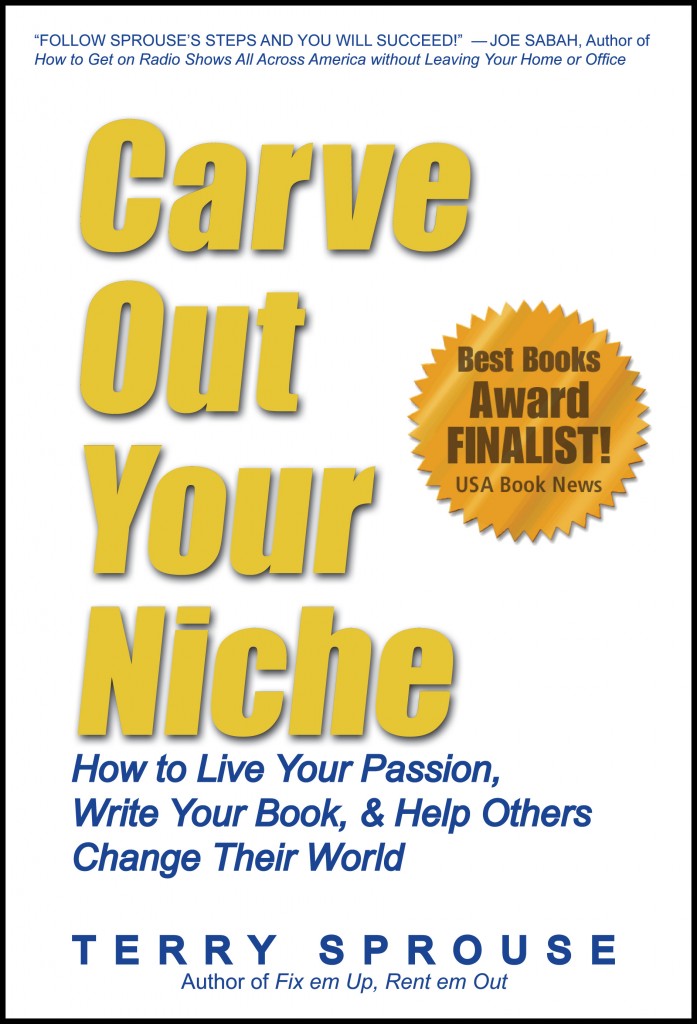
Self-Publish Your Book with “Carve Out Your Niche”
"Carve Out Your Niche: How to Live Your Passion, Write Your Book, & Help Others Change Their World"
"As a direct result of reading this book, I finished writing my book and published it as well. All of this took place within the past 30 days. "
Brian V. Menard, Amazon Reviewer
"Sprouse is one of the most practical authors in this genre I have ever read. 'Carve Out Your Niche' is downright inspiring."
Don Blankenship, "Top 50" Amazon Reviewer
"Invaluable for anyone seeking to successfully write, publish, and market their own work"
The Midwest Book Review
FIX EM UP RENT EM OUT
Purchase FIX EM UP RENT EM OUT (paperback)Award-Winning Finalist in the Real Estate category of the National Best Books Awards, sponsored by USA Book NewsGreat information for anyone starting out in the fixer-upper business. The author has served his apprenticeship in the trenches.
-- Fixer Jay P. DeCima, Investor and AuthorTerry Sprouse has created a profitable rental business in his spare time. What sets him apart is he took action.-- Bob Zachmeier, Investor, Educator, Author With the wit of Will Rogers, this book provides simple guidelines for restoring homes, and sanity to our crazy lives. --M.D. Matlock, Ph.D., P.E., C.S.E.