Archive for the ‘turn your house into a rental’ Category

“Turn Your Home Into a Rental House!” finally sees the light of day

Wednesday, May 15th, 2013


Although it took a little longer than we anticipated, “Turn Your House Into a Rental House Instead of Selling It!” has finally popped out of the incubator and is available as a paperback book.

In a nutshell, what is this book about?

With my charming wife and business partner, Angy, as co-author, we have created a guide on how to find properties, live in them, and then turn them into a rental house, instead of selling them.

According to the “American Association of Realtors,” the average American purchases seven houses during their lifetime. Angy and I believe that those seven houses should be converted into rental houses and held for the rest of our lives. They are valuable assets that will generate monthly income for the hard years to come, and provide further assurance of long-term economic family security. Like the old folktale says: “Don’t kill the goose that lays the golden eggs.”

How does this book help the average Joe?

We show the average Joe where to find the best properties, how to pay for your houses, property inspection, the nitty-gritty steps on how to prepare your new rental house for tenants, how to attract and screen tenants, managing tenants, and complying with EPA regulations. The appendix includes samples of leases, property inspection sheets, tenant selection rating sheets, and many other valuable forms to get you started in your rental house business.

What do millionaires do that most people don’t do? 

Go into politics?

Buy their own Starbucks?

Become a bearded recluse?

Well, those are some of the things they do, but according to Thomas Stanley, in The Millionaire Next Door, most American millionaires own their own houses, and they own at least one rental property.

Our perspective is, “If it works for millionaires, it ought to work for us too.”

Our hope is that this book will inspire you to buy a rental property and to receive the enormous benefits from that one bold action. Even if you buy just one rental property throughout the course of your entire life, your economic picture will almost immediately get better.

You may wonder, as we did, “Why didn’t we do this a long time ago?”

Where do we order this book?

Click here to order the book through Amazon.com.

—–

Recommended reading:

The Short and Sweet Guide to Target Retirement Funds at Fearless Men

Creating an Outsourcing Master Plan For Your Business at Louisville Gals

Top Sights In Australia For The Adventure Seeker at Untemplater

Is There Right Time to Buy Real Estate? at KrantCents

How To Easily Reduce Your Utility Costs | 5 Simple Steps FRugal Habits

How Big Should Your Emergency Fund Be? at Work Save Live

Working Towards A Debt Free Lifestyle In 8 Steps at Canadian Budget Binder

Help Me Spend $1100! at Eyes on the Dollar

How You Can Start Freelancing at the End of This Article at Modest Money

5 Steps to Get Your House Ready to Rent by Terry Sprouse

Tuesday, November 13th, 2012

“Life is either a daring adventure or nothing.”

Helen Keller

If you are following my suggestion and turning your old home into a rental house, or if you are just purchasing an investment fixer upper house, use these 5 steps to prepare your house to rent out.

 Step 1:  Remove Furniture

Move all of your furniture and personal belongings out of your old house. The absence of these items makes the house look bigger and the home is more inviting if it is not cluttered up with beds, chairs, food supplies, and toys. It also makes it easier to do a thorough job of cleaning the house.

This only applies to the first time you rent out your new rental house. After tenants leave in the future, they will take most of their things with them. Of course, some tenants do not follow the normal procedure, and they may leave in the middle of the night to avoid paying their last rent check.

(Occasions like this make it tempting to slip a magnetized GPS tracking device under the fender of the renter’s car.)

An incident like this happened to me a couple of years ago. Not only did the tenant leave a pile of clothing, bottles and boxes of cleaning supplies, cupboards of food, and a sofa, but also left behind a car that didn’t work. (So much for the GPS idea.)

Renters like this one are the exception. Tenants normally take all their things with them when they leave, making it easy for me to prepare the property for the next tenant, and without much effort, present an appealing yet empty house.

Step 2:  Clean Up

 Thoroughly clean the house. This includes painting walls (a fresh coat of paint makes the place look and smell good), washing floors, cleaning appliances (especially the oven), shampooing carpets, washing the windows, cleaning the bathrooms and checking the roof.

 Step 3:  Make Repairs

 Take care of all repair work. Leave nothing to chance and make all repairs before tenants move in. Change broken outlets and switches, patch holes, remove stains, replace cracked and broken glass, repair dripping faucets, replace missing shingles, and fix roof leaks.

The old saying that “Left to themselves, things always go from bad to worse,” is especially true with rental houses. It’s tempting to assume that that small leak in the bathtub, or a toilet that flushes most of the time, won’t bother anyone. But trust me, you will get that call to repair the bathtub or toilet at the most inopportune time.

This doesn’t mean that everything in the house has to be new, but everything should be in working order.

It is a rental house after all, and not Buckingham Palace.

For example, bedroom doors do not have to be replaced every time they have a crack or a hole in them. I rehabilitate the door with wood putty, and a fresh coat of paint. The guy in the “Easy Repair of Hollow Core Door” video below uses drywall mud to fill the hole, with equally good results.


 Buy used construction materials

Missing or broken light switches, outlets, covers can be replaced inexpensively with quality used ones. I have also purchased reliable doors, cabinets, stove tops, dishwashers, and toilets at stores that recycle construction materials, for pennies on the dollar. The Habitat for Humanity Store is one such place that I frequent for good used materials. There are 825 Habitat Restores in the United States and Canada. You can locate a store near you at www.habitat.org

Buy new or used appliances?

 If broken clothes washers or dryers cannot be easily repaired, our policy is to replace them with a quality used one, or with lower end new appliances (like the Kenmore brand from Sears).

 Buy bargain appliances before you need them

 Craigslist and yard sales are great places to find good used appliances at bargain prices. If I see a nice working appliance for a good price, I will purchase it, even though I don’t have any immediate need for it. I’ll just store it in our shed until I need it.

I bought a like-new furnace at a yard sale for only $40 and installed it into a rental house and it has worked great. For furnaces, there are very few moving parts to worry about, and the wiring is relatively simple. As long as the motor works, you’re home free.

I once literally picked up a clothes dryer from the side of the road that had a “Free Dryer” sign taped to it. I gave it a new home and it has been working

Low maintenance yard (in the southwest)

reliably for over 10 years now. The only repair, about five years ago, was that I had to change the on/off switch on the door.

Step 4:  Simplify Landscaping

The front yard of your rental houses must look great. Curb appeal gives the potential tenants a good first impression. Simple and neat landscaping gives the client  comfort that the yard is low maintenance and ecologically and economically low in water consumption saving the tenants money on water and saving you time later not having to replace a yard of dead plants.

This yard went too low maintenance!

I personally like to utilize decorative rocks on our rental yards, and plants that don’t require any watering, like Mesquite and Palo Verde trees, which have long roots that tap into the aquifer.

 Step 5:  Re-key the Locks

 One other thing that I like to do before a new tenant moves in is to re-key all the locks. This is cheaper than buying new doorknobs, and it provides security for our tenants. This protects you and your tenants in case a previous tenant has surreptitiously kept an extra copy of a house key.


Required Roof Maintenance for Fixer Upper Houses

Monday, July 2nd, 2012

One of the jobs associated with operating a fixer upper and rental house business is to keep your rental properties in ship shape!

With the annual approach of summer rains, now is almost the last chance to make rental house roofs water proof before the watery onslaught. As someone who has a sworn aversion for arriving too early to parties, I subscribe to the time-tested philosophy of “better late than never.”

This morning I applied some black roofing cement on some areas on one of my townhouse roofs. I had located some cracks upon my inspection of it about 2 weeks ago.

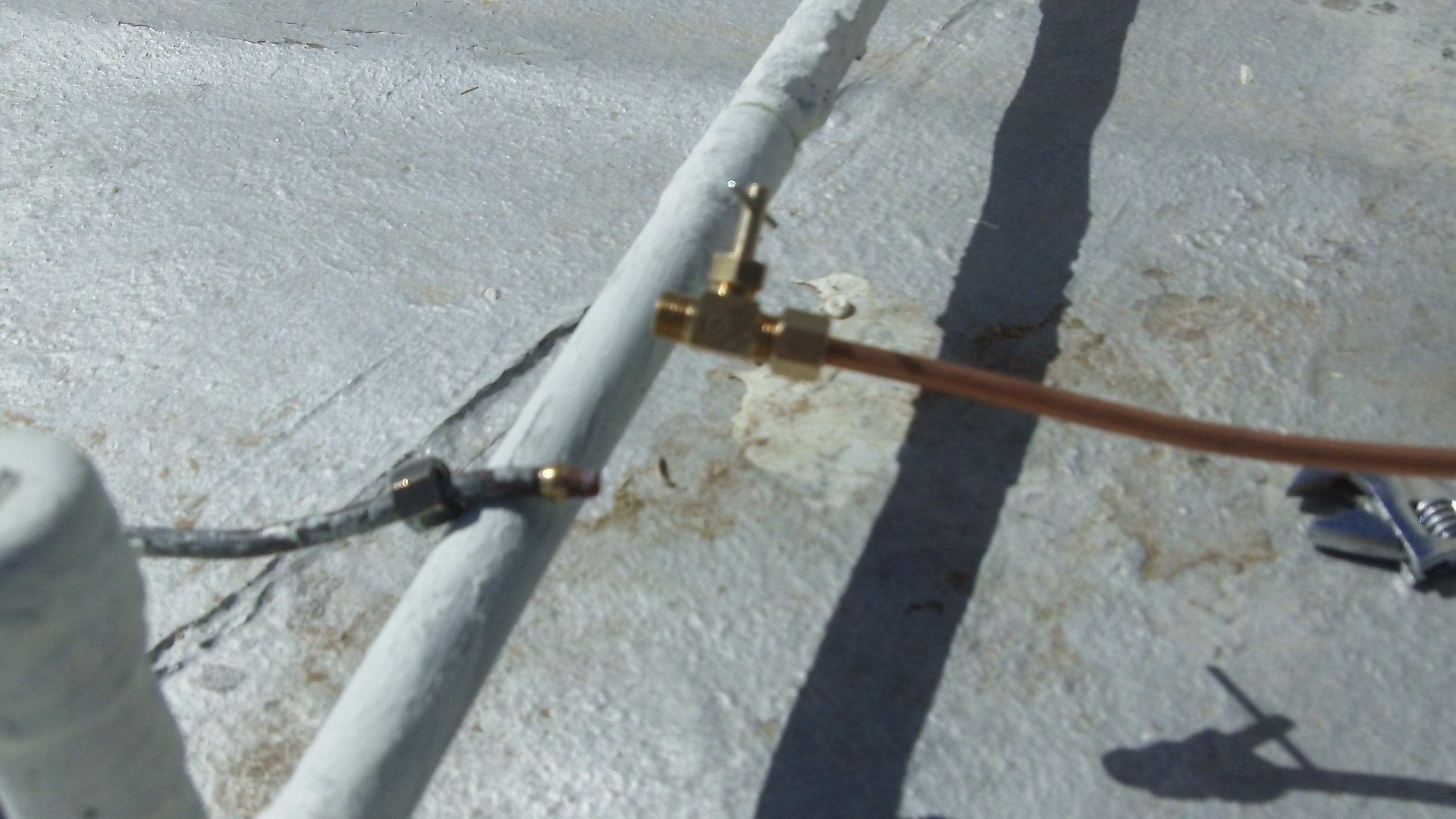
The first photo shows the area in question, where I had previously applied a small amount of plastic roofing cement, but today I was going to put on some more and cover a broader area.

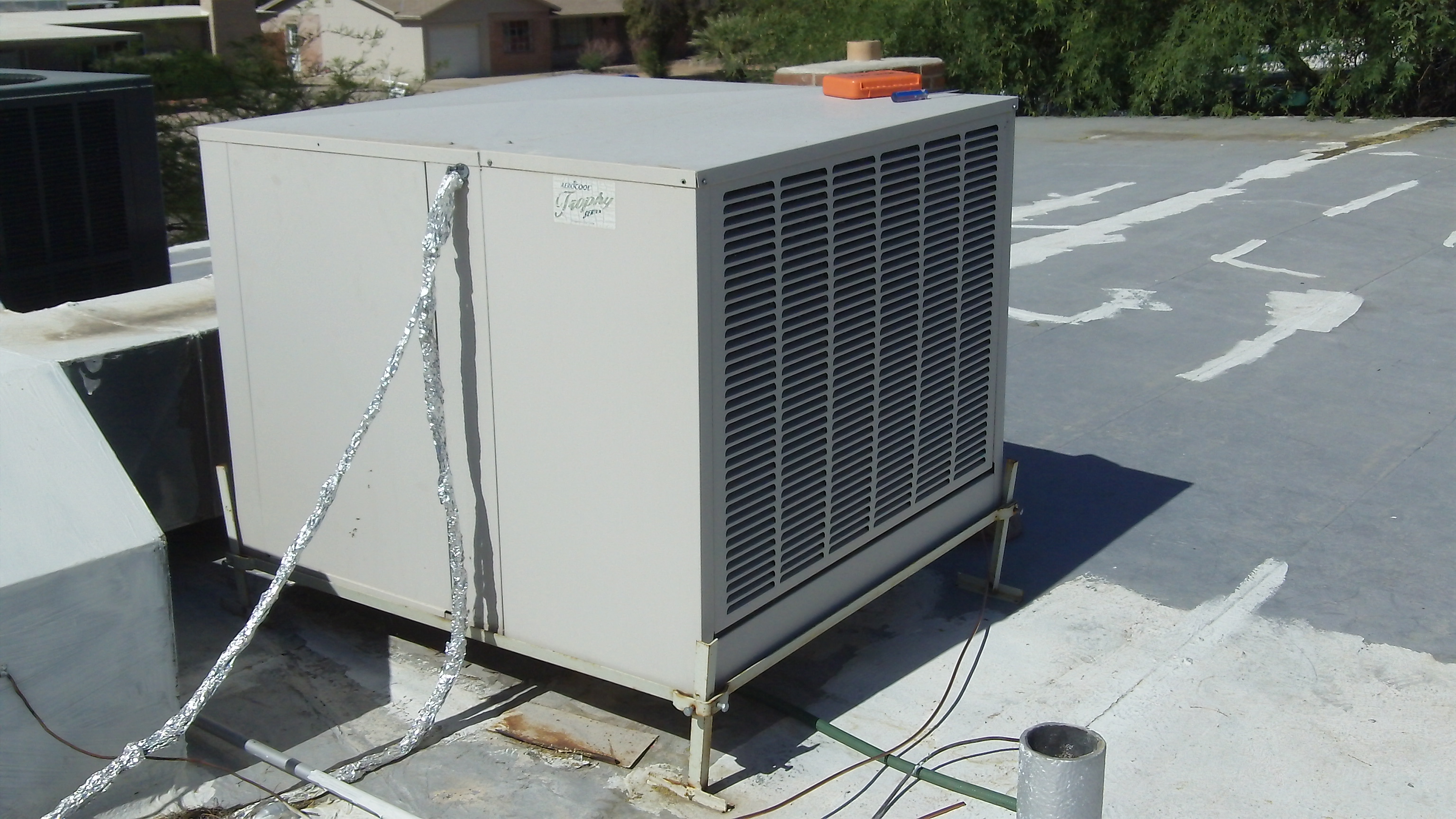
Before picture

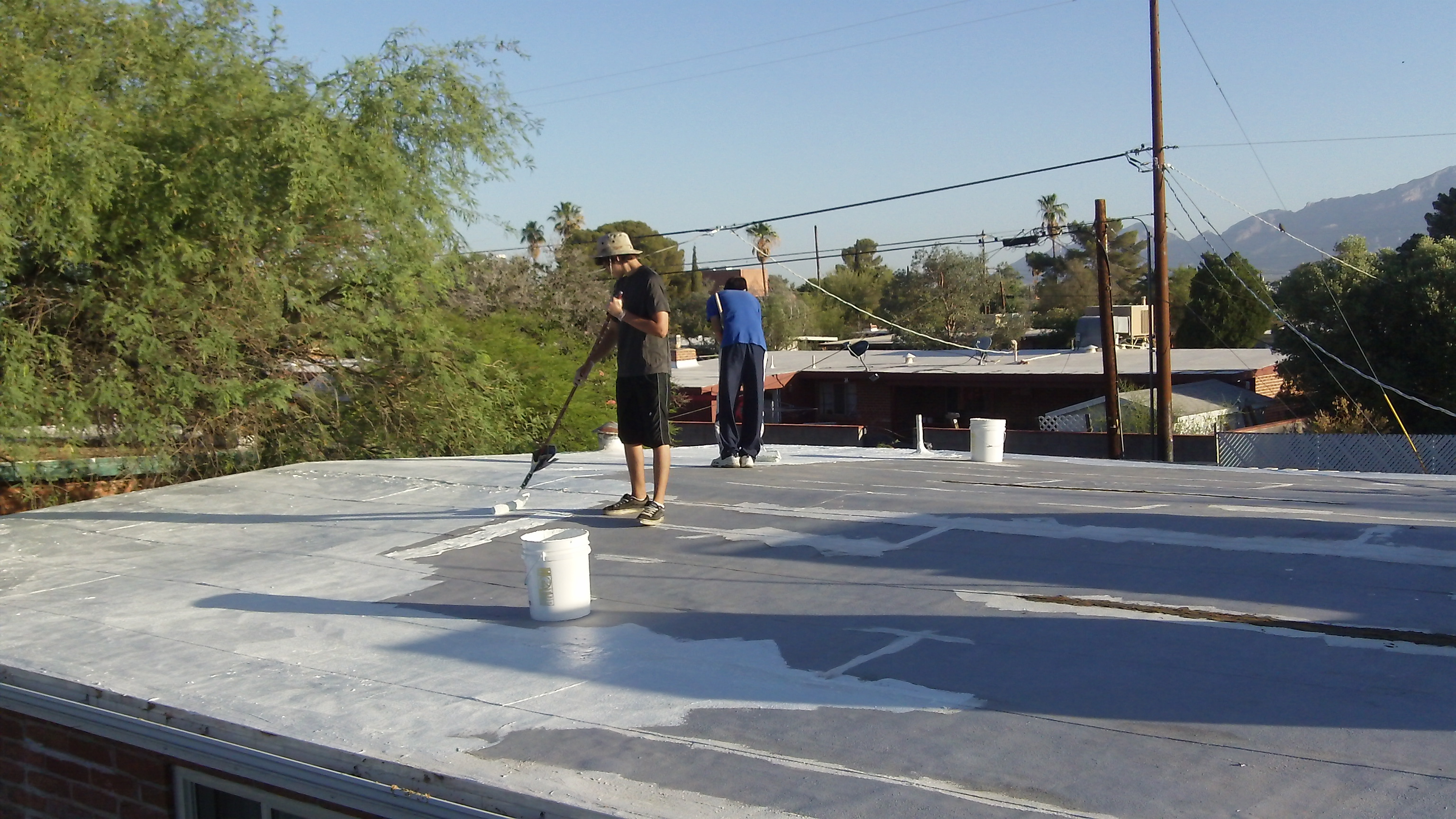
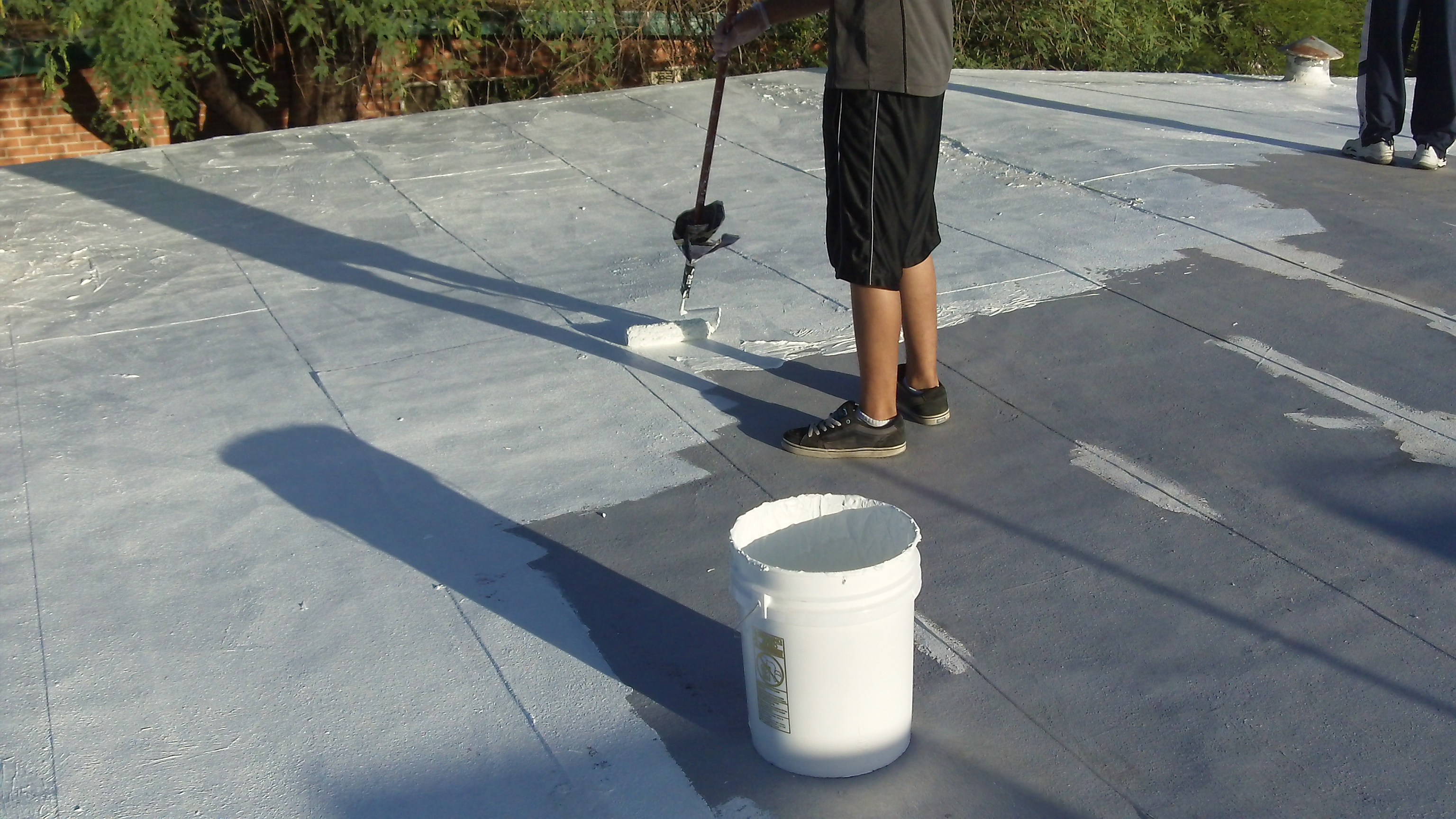
The second photo shows the application of the plastic roofing cement. We apply one layer of cement, then put a white membrane on top of that, followed by a second layer of cement. The membrane allows for more cement to be applied.

Application of roofing cement

Below is the “after” photo. You can see that in addition to the corner, we hit a few other cracks with our roofing cement on the sides of theroof. Later, we’ll come back with white roofing paint to cover the black cement.

Completed repair

A good rental house

My wife and I purchased this 2 bed 2 bath townhouse in 1993 and lived in it for 10 years before moving on to a bigger house (to accomodate our growing family), and turning this property into a rental house in 2003.

Its been one of our best rental houses because it is in a “transition” zone (aka “opportunity zones”) where there is heavy demand for housing, and it is easy to care for because it is compact (1100 sq ft with small front and back yards). The townhouse perfect for single people or small families.

We originally purchased it for $53,000 and we charge $750/month (more if the tenants have pets).

Funniest Tenant Screening Stories

Monday, June 4th, 2012

This guest post is from Endre Rex-Kiss, an online marketing, social media and human resource enthusiast. He currently represents FidelisAM, a US based agency providing employment and resident screening services. Follow his occasional guest blogging activities on Twitter.

Tenant screenings is the way to go if you want quality tenants and most landlords come across potential tenants who are either not what they claim to be or have serious behavioral problems. This article takes a look at the funniest screening stories landlords have had and their aftermaths. So sit down, relax or better still grab a cold bottle of beer to nurse while you go through the experiences below.

The Estranged Wife

A couple with no kids moved into a 4 bedroom duplex in the suburbs, the house and environment provided the perfect scenery for the couple but there was only one problem and it was that of meeting up with their mortgage payments. So they decided to put a room up for rent. The necessary adverts were created and finally a prospective client came knocking, he was the perfect tenant for he claimed to be single, had no pets, did not smoke, drink, do drugs and had a well-paying job. This obviously was too good to be true so the couple decided to hire an agent to conduct a little screening on him. After two days, the agent returned to tell the couple that they had been invited to have dinner with the previous landlord of their prospective tenant. On getting there, they were told that the tenant usually preys on sympathetic landlords and if you fall into his trap by renting a room to him, he would move in, behave for some days but a week later a woman who would claim to be his estranged wife would come visiting for some time and then finally move in with a cat. They would then proceed to co-habit like pigs, steal your property and when rent is due, disappear like thieves in the middle of the night.

Ghost Tenants

A couple responded to a landlord’s accommodation advert, they came to see the Landlord and professed that they loved the apartment and would be willing to rent it for the long term. The landlord was convinced that they were the perfect tenants so when the wife came calling the next day without her husband (due to the supposed fact that he works late) to ask for the keys to the apartment so she could look through it, the landlord duly obliged. A day passed, the lady did not return, two passed and she was still missing. The landlord quickly called his agent who conducted a quick search only to find out that the woman and her husband had already moved into the apartment. The police was called and the couple quickly evicted.

Dead beat Prospective Tenant

An agent once recommended a tenant who had the best recommendations ever; he had a good job, perfect credit and good relationships with his previous landlords. A meeting day was fixed and the prospective client shows up with a dead beat car and the attitude of someone who was one step ahead of the law. The landlord who needed to rent his facility out as soon as possible, overlooked this tell-tale signs and had agreed to lease the apartment to the tenant. The recommended signatures had already been traded and an upfront deposit had been made but as luck would have it, a police officer who was driving randomly through the neighborhood spotted the prospective tenant, felt his face was familiar and got down to trade some questions. Suddenly, the tenant bolted and a foot race began. The tenant was finally apprehended and the landlord discovered that the name, details and personal information given by his perfect tenant had nothing in common with the tenant.

The Thief

A couple came with an agent to view a landlords property, after going through it, they decided it was perfect and would be signing the necessary papers the following day but there was just one issue, they needed the house repainted. The landlord obliged, carried the necessary equipment to the house and started painting. He painted into the night and decided to spend the night there instead of returning home late. In the middle of the night, he began to hear strange noises at the side of the house, quickly he got up to investigate and on getting there, he found his prospective tenant trying to detach an A/C unit.

These stories show that conducting an in-depth screening which should include: former landlord credit checks, recommendations and past criminal activities are highly recommended.

Upcoming Speaking Engagement – Terry Sprouse (author of Fix em Up Rent em Out)

I will be making a presentation to the Arizona Network of Real Estate Investors. Mark your calendars.

Where:
Fidelity National Title, 6760 N. Oracle Road, Suite 100, Tucson, AZ

When:
June 7th, 2012

Time:
Meeting begins at 5:30 pm, presentation at 6:00 pm

Title: The 5 Rules on How to Lose Money & Get Your Rental Property Trashed by Tenants

Silent Wealth Generation with Rental Properties

Thursday, January 12th, 2012

When you own a rental property, two silent forces at work to increase your wealth:

1.) principal reduction, and

2.) increasing equity.

With each mortgage payment, you decrease the amount that you owe on a home loan as you reduce your principal. When your property is rented out, your tenant pays your loan for you. At the same time, equity goes up as property values appreciate over time.

Let’s assume that the original mortgage (loan) for a property is $150,000, which is also the original value of the house. As time goes by, the value of the house may increase to $300,000, due to appreciation. At the same time, the amount owed on the mortgage is reduced to $20,000, due to the mortgage being gradually paid down. At this point, the amount of equity (or value) that you have in the house would be $280,000.

If we don’t allow periodic dramatic rises and falls in home values to shake our confidence, we can count on steady, long-term, profits from our investment properties.

Carve Out Your Niche” Radio Interview Tomorrow

5 Tips to Attract Tenants to Your Rental House Like Elepants to Peanut Butter(video)

Saturday, January 8th, 2011

In these 5 Steps you will master my secrets of how to drive tenants to your rental property. Learn which signs work best, where to advertise, and how to word ads and flyers so as to reduce unnecessary calls for information.

How to Prepare a New Rental House for Tenants (video)

Sunday, December 12th, 2010

Get your rental house ready for tenants by following my 5 steps.

I also recommend four of my favorite repair books for your real estate library to guide you through the process of repairing appliances, sinks, electrical outlets, and almost any other repair issue that you may encounter.

Turn Your Home into a Rental Property (video)

Tuesday, November 23rd, 2010

What is the most powerful thing in the world?

An idea that has been planted in a person’s mind.

To improve your economic security you should plant in your mind the idea you should never sell a house. Converting your home to a rental house can provide long-term rental income and economic security to you and your family.

Do tenants pay utilities, and how much for damage deposit

Saturday, October 16th, 2010

Here is another letter that I recently received that asks some pertinent and common questions related operating a fixer upper house business, that I would like to share with you.

Dear Terry,

We’re moving along towards renting out our first rental house…and I was reading your month-to-month lease agreement from the Never Sell Your Home book– it looks very good and we plan on using much of it, but I did have a few questions:

1) What % of the monthly rent do you require as a security deposit?

2) Should the Lessee(s) be responsible for all utilities, or should I pay the utilities for them?

Thanks for your help – !

Steve Klausman
Santa Fe

Dear Steve,

Congrats on your progress in preparing to rent our your first house. Don’t get discouraged if it’s rough sledding at first, the first house is the one that you learn the most from.

Security Deposit

In answer to your first question, the amount that I charge for security deposit is the amount of one month’s rent. So if the monthly rent is $900, the security deposit is also $900.

Some tenants may have trouble coming up with both the rent and the security deposit at the same time, in this case, a tidy sum of $1,800. So, I sometimes let them pay the security deposit over the course of 2 months, to make it easier on them.

Since you are just starting in the business, something to do from the beginning is to keep the security deposit and the monthly rental money from your business in a separate bank account from your personal bank account. The IRS doesn’t like to see the funds mixed together.

Who Pays Utilities?

In answer to your second question. I always have the tenants pay all the utilities themselves. Not only does it encourage them to conserve, but it vastly simplifies the process for you. Also, I have the tenants put the utility accounts in their own name, so that I’m not liable for their expenses.

In most states, you can sign up for a “Landlord Agreement Account” with the utility companies that allows you to switch the accounts to the tenants and back, with less paperwork and expense.

As you move along feel free to send me more questions as they arise.

Your (self-appointed) personal rental-home consultant,

Terry

Letter on Selecting Tenants

LLCs vs insurance for protecting rental properties, redeux

Sunday, October 10th, 2010

I’m opening up the old mailbag and sharing a message that I recently received about operating a rental house business, and my response.

Hi Terry,

Thanks for writing those books – really enjoyed – and found your, ‘Never Sell Your House Book’, especially interesting and helpful.
We’re on our way to buying a new home (got a great deal on a home in a good area w/ a great interest rate ~4.4% w/ no points…), and we hope to rent our existing house out, as you suggest.
Rental comps in the area are ~$1,300/month, which would cover the new PITI…although, in my humble opinion, $1,300/month seems high – I can’t imagine people would spend that to rent…. but I guess they do. I think I would take less for low-maintenance renters.
I like your lease agreement forms in the Appendices.
Q: Would you suggest setting up the rental property as an LLC in order to CYA?
Jay Carson
Phoenix
———
Dear Jay,

Congratulations on the purchase of the new house. It’s good to hear that you were able to follow my advice and turn your old house into a rental instead of selling it.

In answer to your question on LLCs. Generally, LLCs do not provide an impenetrable  protective shield against lawsuits, contrary to those who  sell and over promote the benefits of these products.

It’s  like hiring Gary Coleman to be your bodyguard. You might have some protection from an assault, but probably not enough.

The best protection against lawsuits is a good insurance policy. If you have a good insurance policy and you are sued, your insurance company should defend you and pay for the damages if you lose the case.

(For a more comlete discussion of this topic see the earlier blog  article, Protecting Rental Properties: LLC vs. Insurance by lawyer  John Gravina.)

If you have any other questions, feel free to contact me again!

Best regards,
Terry
___
If anyone else would like send me with questions or comments, feel free to use the Contact Form on the “About Me” page of this blog.